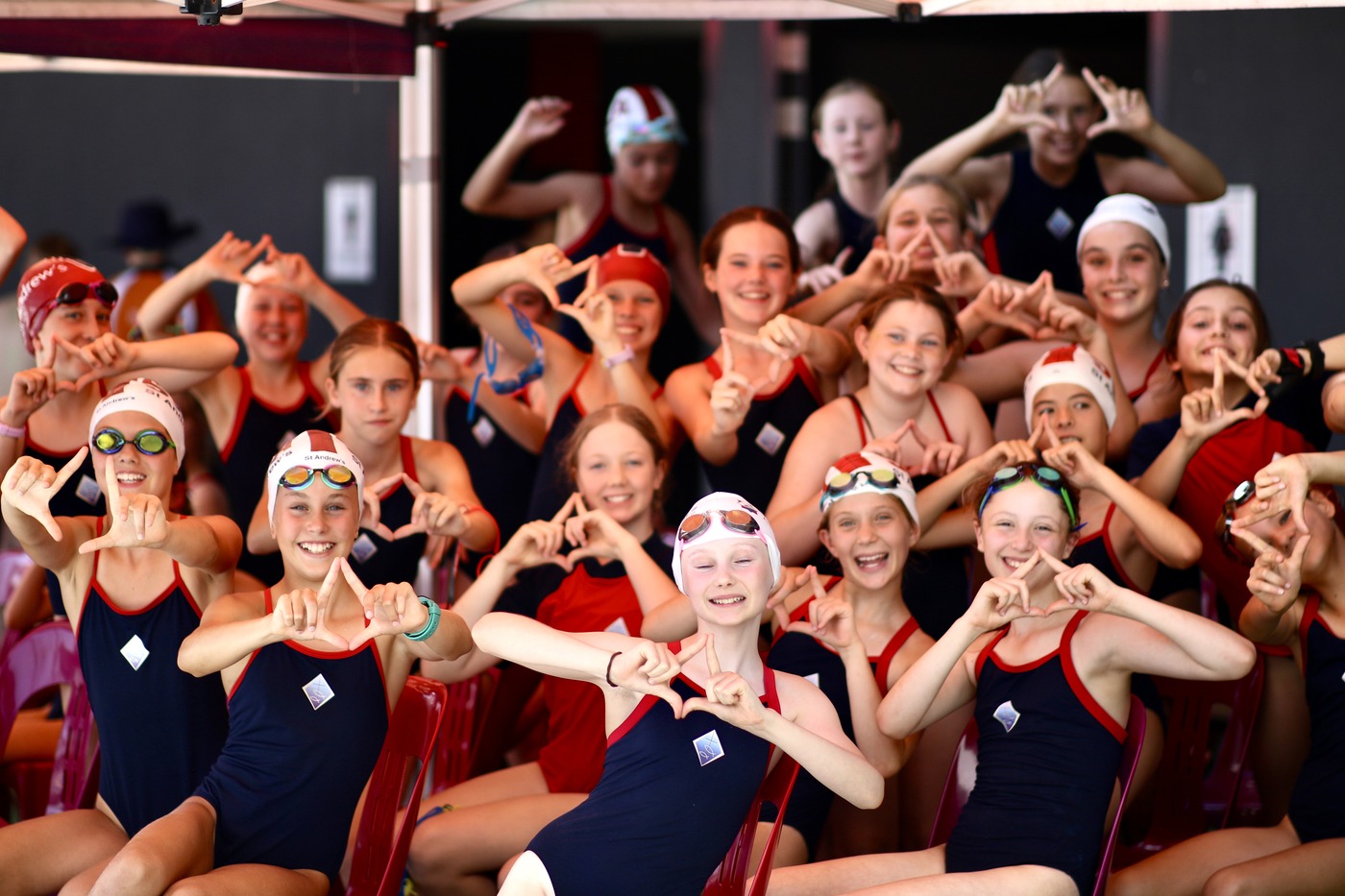
Rich and Diverse
Our Primary School provides a rich and diverse educational experience full of opportunities for students to develop and grow in a supportive, caring and inspiring environment.
Our teaching and learning staff are committed to developing strong, positive relationships with their students to create a learning atmosphere that enables students to develop tolerance, respect and co-operation. With a strong focus on the importance of building positive relationships between staff, student and parents, the comprehensive nature of our curriculum and pedagogy encourages all students to be confident and creative individuals, successful self-regulating learners, and active and informed citizens.
Blending explicit instruction, inquiry, and purposeful investigation
At St Andrew’s Anglican College, our Primary School pedagogy is designed to balance academic rigour with student engagement. We have evolved our teaching practice to blend the best elements of explicit instruction with guided inquiry and investigation.
For students in Years 1 to 6, this approach is designed to maximise student outcomes by prioritising explicit instruction in both Literacy and Numeracy during the first sessions of each day. This ensures that every child builds a solid foundation in these critical skills through structured, evidence-based teaching.
We recognise that student engagement extends beyond formal instruction, blending impactful elements of inquiry-based learning to ensure a holistic education. Students continue to have the opportunity to play, be individually recognised, and be involved in creative projects. This "blended" methodology allows students to be active participants in their curriculum, posing questions, solving problems, and exploring their interests, while being supported by clear, directed teaching.


Prep
In Prep, our approach helps build confidence and communication skills by linking interests to learning intentions.
We use scaffolded links to explicit teaching in Literacy, Numeracy, Science, and Humanities. This includes allocating time to 'tune in' and reflect on key learnings through 'Investigation' sessions.
During investigations, students explore ideas and interests in developmentally appropriate ways. These sessions take place in purposefully designed learning centres that encourage students to co-operatively share resources while developing oral language and negotiation skills. Teachers act as facilitators, observing individual development and encouraging deep thinking, while students take on roles like 'Reporter' and 'Photographer' to make connections and build confidence.
By allowing students to follow their own interests and solve problems in real-time, this process fosters genuine student agency and transforms them into active learners who are invested in their own discovery.
Years 1 to 6
In Years 1 to 6, students continue to develop their skills and knowledge through a model that promotes increasing independence.
As students move through the lower Primary years, the focus shifts to consolidating core academic skills while applying them in real-world contexts. While the mornings focus on explicit Literacy and Numeracy, the curriculum also continues to allow for rich project-based learning. At the heart of our approach are pedagogical approaches based on the Science of Learning and current educational research. The learning environment is designed to be flexible, providing opportunities for students to work individually, in small groups, and in whole groups, valuing the unique needs of each student.
A highlight of this approach is the Year 4 Sustainable Expo. This immersive project introduces students to the fundamentals of economics, design, sustainability and entrepreneurship. Students create their own products and businesses, applying their mathematics and social science knowledge in a practical and, sustainable marketplace environment.

A unique ‘thread’ throughout Primary, is the Robotics Immersion Program, helping to develop logical reasoning, persistence and design-centred learning across every year level:
- Prep & Early Years: Exploration begins with floor robots and simple sequencing, turning abstract directions into physical movement.
- Years 3 & 4: Students move into more complex builds and visual programming, using robotics to solve challenges in Science and Mathematics.
- Years 5 & 6: Robotics becomes a key tool for innovation, culminating in advanced engineering challenges and integration with our STEAM initiatives.
Music is also a key component of the curriculum in these years, based the positive impact structured music learning has on brain development in the early years. In Year 3 and 5, our students are involved in a Music Immersion program, in which students receive two lessons per week; one in classroom music and one to learn a stringed instrument (Year 3) or band instrument (Year 5). Students in Year 4 and 6 have the option to continue with instruments learned, or participate in classroom music lessons.
In the upper Primary years, the learning environment promotes increasing independence to prepare students for Secondary School. Our innovative and carefully sequenced STEAM program builds students’ skills and understanding through a Design Centred Approach. Learning experiences are intentionally designed to progress from simple to more complex concepts through hands-on investigations, creative problem-solving and real-world connections. Students are encouraged to think critically and creatively, collaborate and apply their learning in meaningful ways in our state of the art facilities.
Uniquely St Andrew’s
Subject Focus Areas in the Primary school at St Andrew’s, include: English, Mathematics, Science, Humanities and the Social Sciences. Students' educational experience is further enhanced by their participation in a variety of specialist subject areas including: Christian Education, Health and Physical Education, Music, Spanish and Visual Art. Each of these subjects is delivered by expert specialist teachers who tailor their lessons to the age and stage of the students.
Student Leadership can be directly linked to Service Learning which is a key component of our College’s strategic intent. We provide opportunities for students to serve and learn, to develop an understanding of the responsibilities that come with being part of a local and global community. Opportunities for leadership are available to all Year 6 students who are interested in exploring their leadership potential.
Each Term, Year 6 classes rotate through roles where staff require assistance, such as Assembly, Music, Sport, Learning Hub, Carnivals, Art, Special Events, Student Media, and Lost Property. We believe such roles enable students to gain valuable leadership experience by growing their confidence, building teamwork skills, working collaboratively, solving problems and making decisions, contributing to their ability to become responsible citizens and positive role models.
IGNITE is a program that uses the school-wide enrichment model based on the Renzulli Learning System, to help support talent development and provide opportunities for students to explore and be immersed within their interest/talent areas.
Enriched clusters are created for students in Years 5 and 6 to explore their specific talents and passions. Whether in the arts, sciences, or technology, students work in groups under the instruction of trained teachers to undertake projects based around their personal interest areas.
We believe in the power of evidence-based reading instruction. That's why we have adopted the Science of Reading as the foundation for our reading program. The Science of Reading is a research-based approach to teaching reading that emphasizes the crucial role of phonics and systematic, explicit instruction.
In our Prep program, we use InitialLit as our primary phonics resource. InitialLit provides engaging, interactive lessons that help our students develop strong phonemic awareness and sound-symbol relationships.
In Years 1 and 2, we continue to build on the foundation laid in Prep by using Decodable Readers Australia as a supplement to our core reading program. Decodable Readers Australia provides students with age-appropriate texts that are carefully constructed to be consistent with the phonics skills they are learning. This helps students build their decoding and comprehension skills simultaneously.
By combining these evidence-based programs with our other reading instruction, including fluency development and vocabulary instruction, we give our students the tools they need to become confident, competent readers. At St. Andrew's Anglican College, we are committed to providing our students with the best possible reading instruction, and the Science of Reading is a key part of that commitment.
The College greatly values and supports the unique challenges sought by and suited to students ready for more than the core curriculum of their year level. There is a wide range of opportunities available to students identified by the College as having learning needs suitable who would benefit from enrichment and/or extension through a review process conducted by the College’s Extension & Enrichment Management Team.
A wide range of sporting, outdoor and cultural activities are provided to all students from Prep, which help to develop self-esteem and social confidence.
Student Wellbeing in the Primary School
Within the Primary School we aim to address the social, emotional and personal development of each student.
This is through explicit teaching of interpersonal abilities to assist students to navigate these spaces in a confident way, knowing they have the skills in place to navigate their day. We do this through three specific ways, to promote the wellbeing development of each student - through URStrong, Restorative Practices and Let’s Chat. By teaching students important skills related to social and emotional development, promoting positive relationships, and fostering a safe and supportive environment, students are able to thrive both academically and personally.

Student Wellbeing
URStrong is a program designed to help students develop healthy friendships and relationships with one another. It teaches our students important life skills to help build and maintain positive relationships with their peers. By learning and putting into practice important social and emotional skills, such as empathy, kindness and communication, our students can develop a greater sense of self-awareness and assist in maintaining positive relationships with their peers. Students have explicit lessons within the classroom each week aimed to help navigate social situations more effectively, build positive relationships and develop a greater sense of confidence and self-esteem. Along with explicit class teaching we also have parent webinar sessions and access to a free parent portal to assist parents with resources and the language used within friendships to keep strong consistency between home and school.
We are a Restorative Practices school, which promotes effective ways to foster positive relationships and healthy conflict resolution. These practices involve creating a safe and supportive environment in which students are encouraged to take responsibility for their actions, repair harm caused to others, and work together to find solutions to problems. Restorative Practice sessions are a calm way to give all students a chance to feel heard, valued and repair harm caused.
We promote student awareness about their bodies with the assistance of Let's Chat. Let’s Chat is a program designed to promote awareness of healthy bodies and give students a greater understanding of their own growth and development. We also run student and parent workshops for our students in Years 6, aimed at the transition in to Secondary School and the importance of having the students aware of their development at this time.
Latest Primary News
View All
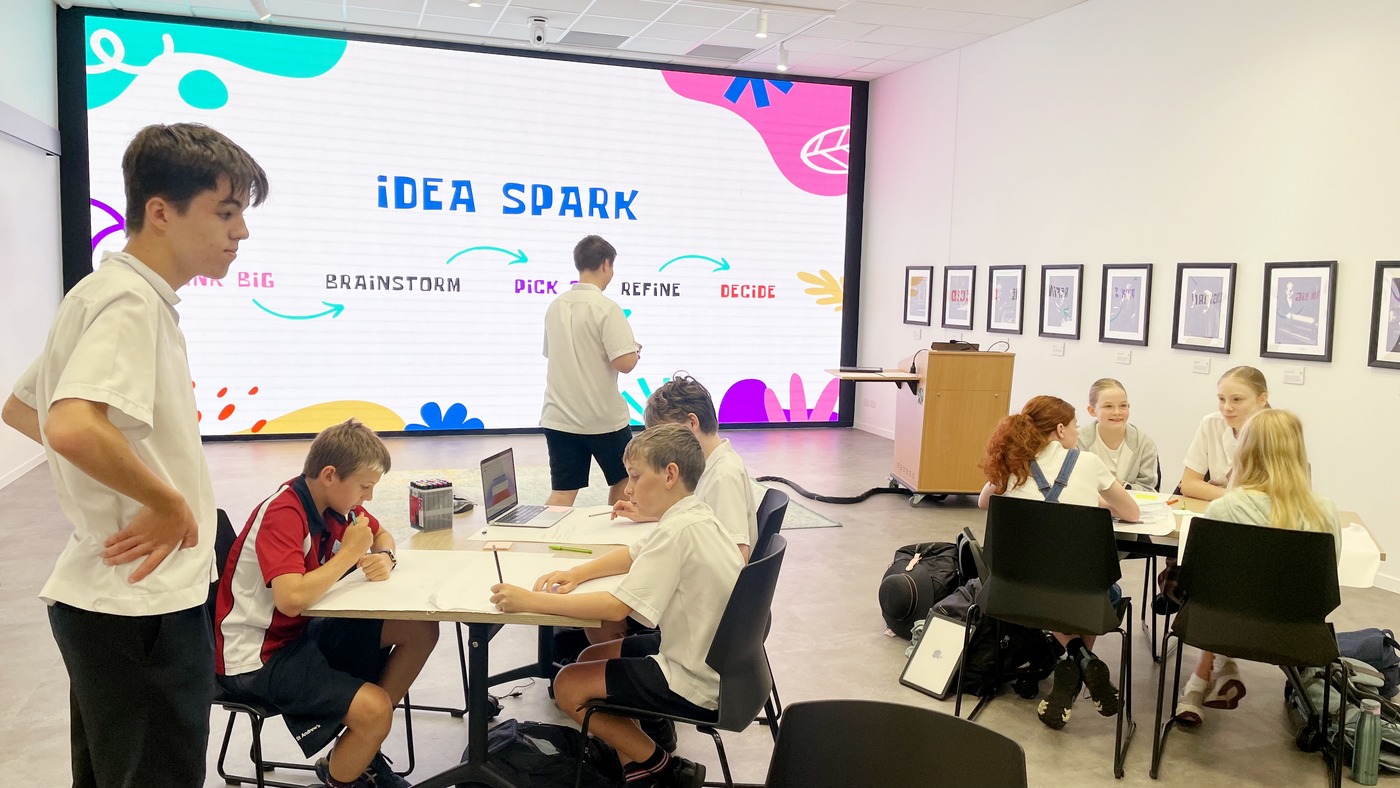
St Andrew's Students Lead the way in literacy for the Age of AI
October 17, 2025
Read Full News
Brighter Tomorrows: Crafting Hope for Children in Hospital
September 02, 2025
Read Full News

St Andrew's named as dual-finalist in National Education Awards
May 13, 2025
Read Full News
St Andrew’s Anglican College Named 5-Star Innovative School for 2024
December 10, 2024
Read Full News